Why long-form threads replacing traditional blogging on X/Twitter?
Ejaz Ahmed
27 Feb 2026 | 5 min read
For a long time, blog posts were the main sources of detailed and lengthy information. But now, there is a visible shift happening.
Long threads, especially on platforms like X, which was called Twitter earlier, are emerging as strong and sometimes better alternatives to traditional blogs. As a person working in SEO, this situation shows an important change in how content is created, how users interact, and how information is distributed.
Why are threads becoming more common on X/Twitter?
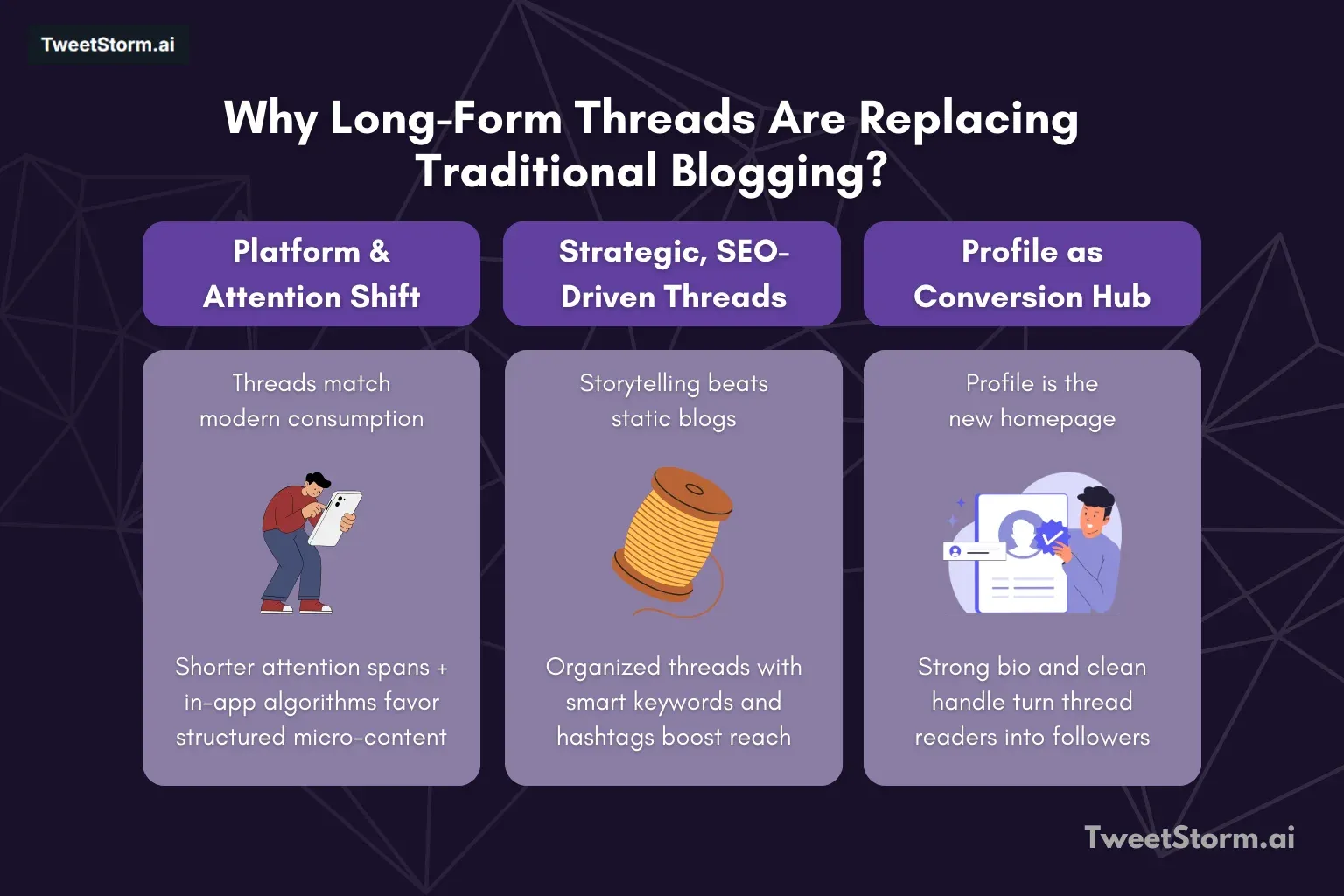
People who create content and those who read it are moving away from traditional blog websites and gravitating towards micro-content posted in order, like threads. This mostly happens because attention spans are getting shorter, and algorithms on platforms are different now.
There is too much information everywhere nowadays, so users want content that is easier to absorb, quickly accessible, and fits with how they usually consume information. Threads do this well. They break bigger ideas into smaller parts, with each part providing concise points of value.
Most often, the first part of a thread grabs people with an interesting start, making it easier for them to interact instead of opening a blog link that may seem too long or contain two thousand words.
Also, social media algorithms now like posts that keep users inside the app more. Threads show this kind of useful content. When a thread gets popular, all related posts get boosted, and the person who made it gets a lot of free reach. That kind of reach is now too costly if you use regular blog links outside the platform. Because of this, writing a careful thread usually gives much bigger results for visibility than making an ordinary blog post.
Making threads: More than just simple posting
Making a thread that is as deep and valuable for SEO as a blog article requires smart planning. It is not about just putting 20 random tweets one after another; it is about telling a story properly, using keywords well, and optimizing it for specific readers.
If you want your long, detailed content on platforms like X to work best, you have to build your main points in a neat way. Tools that help with being efficient and effective are very useful at this step. You may have the main idea from your knowledge or skills, but you have to make the content easy to access.
If you are finding it hard to put your full knowledge into short, sharp sentences that threads require, you can use the Tweet Generator. This tool helps create genuinely valuable and original content quickly by generating tweets according to the ideas that suit your thread.
To add, a thread is successful if people can see it quickly and keep finding it afterward. When compared to blog posts, which depend on picking keywords that are not too common, threads depend a lot on topics that are trending and on using tags well.
This is why learning to use proper and current tags is really important. If you use Hashtag Generator, you get lists of trending, similar, and detailed hashtags, which boost the chance of your thread reaching the right people outside your usual contacts. Those tags make sure your topic explanation gets shown to users who are searching for it.
Making your digital self better
Moving towards threads also means you must look over your complete online image. Your profile is now where all content lands, whether it is a thread with many details or a link to a resource.
You can see your X profile like how "About Me" pages used to be for personal branding. When someone finds a thread they like, usually their next step is clicking on your profile. Is your profile making your skills and what you offer clear right away? Using Bio Generator helps make a strong biography that has the right keywords and turns thread readers into regular followers.
Also, picking a recognizable and professional username is important for building your brand. If you try Handle Generator, it assists in getting a unique and fitting name that connects with your work identity and lets people spot and mention you without confusion.
Why do Tweetstorm utilities give combined perks?
Long-form threads have their strength in sending complicated information quickly and widely. However, manually building, planning, and improving these multi-message stories requires significant effort and can be demanding. At this point, platforms that bring together the necessary optimization functions offer significant benefits.
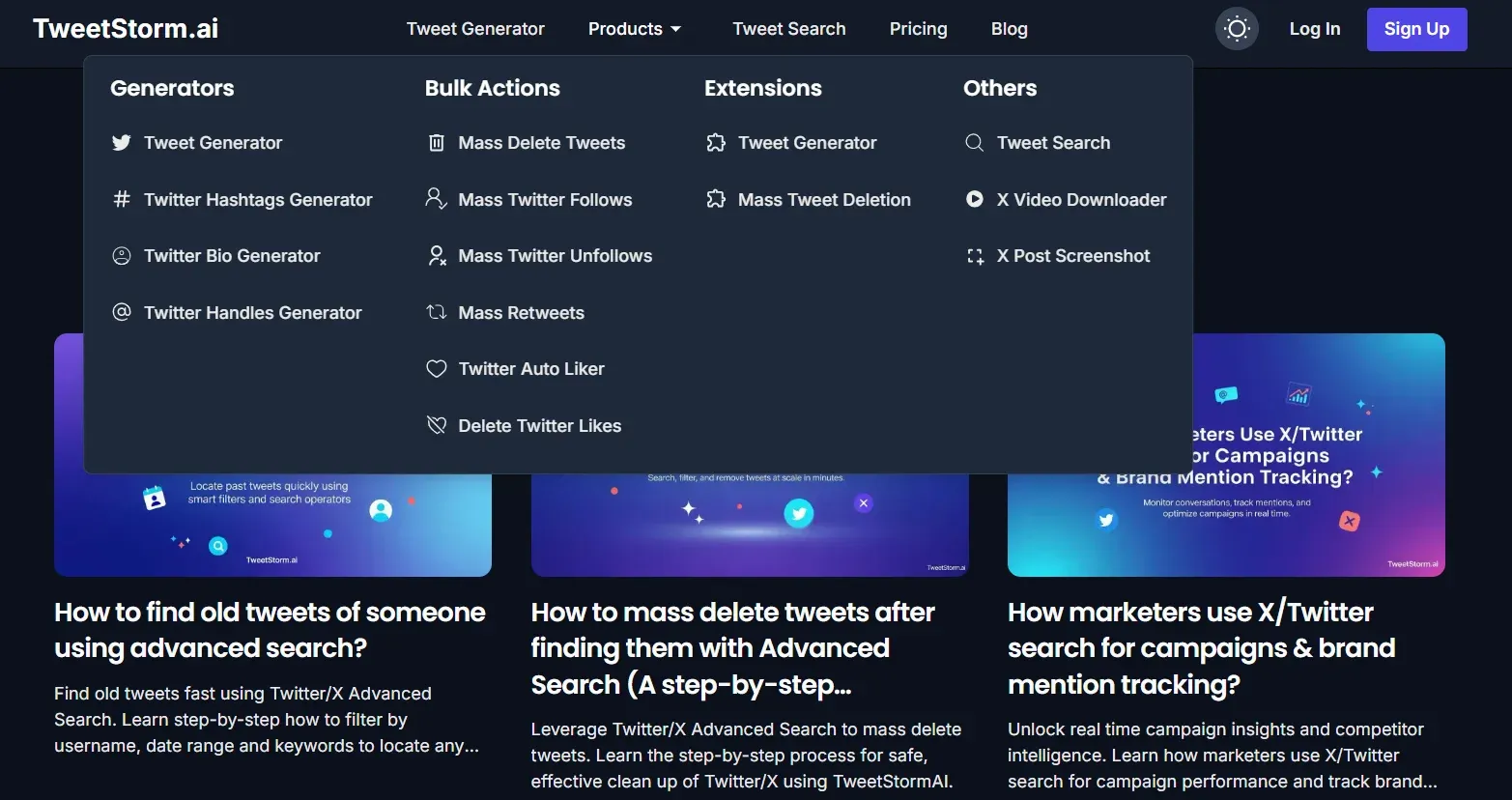
Tweetstorm’s tools for Twitter/X work together as one complete solution for the current content maker. Content creators do not swap from one platform to another or keep holding brainstorming sessions; instead, they are able to use these connected tools to make work from starting a thread to publishing it much easier.
By doing this, time is saved and every piece of content uploaded can be strategically connected for better engagement, discovery, and brand consistency. The move from classic blogging to active threading is made smoother and more useful.
Final thoughts
The drop in traditional single blog posts and the rise of longer social threads is not evidence for content dying, but for content growing. It is changing into more direct content that reaches viewers where they are, focusing on how easily it can be taken in and on fast satisfaction.
With tools that boost how content is shaped and noticed, like those that Tweetstorm
gives, those making content can move with this new way of content, making sure the extended stories not only go out to people but also hold their audience closely. The upcoming way for detailed content is to be divided, improved, and fit right for the social sites.
FAQs
Why is a thread more useful than a normal blog post for SEO?
The main advantage is support from algorithms and getting more natural attention; threads belong on the platform, so social apps such as X want to push these to keep people on their site, which results in many more direct views compared to an off-site blog link, making it harder to get a high ranking quickly.
What is the ideal length for a long thread to reach the highest interaction?
There isn’t a solid number to use, but threads that succeed often have 10 to 30 separate posts. What matters is that each post must present a certain idea, maintain an interesting story flow, and finish with a powerful ending or instruction on the next action to take.
Is it possible to generate leads from threads just as from blogs?
Yes, for sure. Rather than putting the product link in the first block (which blogs usually do), threads make people believe and buy in by sharing proper content. The last post, or sometimes a middle post, should give an exact call to action, connecting to a newsletter, lead page, or product site, using much higher interaction in threads for success in turning visitors.
Do I need a special blog if I use threads most of the time?
Threads are useful, but a blog or website serves as the permanent, trusted spot for your content and ideas. Threads do well in spreading posts, but a website keeps you in charge of the look, stores content for the long term, and provides materials for deeper dives, without worries about sudden rule changes from social platforms.
What is the best way to turn older blog posts into threads that work well?
Get main sections, starting headings and strong points from the blog, then fit each into one or two short posts in a thread. Build a catching start from blog headline or main idea for the first thread post, and be sure the thread follows the same thinking path as the blog.
Newsletter
Never miss a post
One email a week with everything new on the TweetStorm blog.