Why are old tweets becoming liabilities?
Ejaz Ahmed
11 Mar 2026 | 5 min read
In the world now, where social media is quick and people are always watching, things you posted even ten years ago can show up again and mess up your life today or even later.
For lots of people, an old tweet you can search up, a random joke, a weird opinion, or an emotional comment from youth, is not just something left on the internet; it is waiting to become a problem.
This situation, where your past posts on social media turn into trouble for your work or your personal life, is making people think more about taking care of their digital actions.
The danger of old X/Twitter posts being found: your past is not hidden
The main issue comes from how things stay forever on the internet and also from the fact that search engines and websites keep getting better at finding information.
The problem with lost context
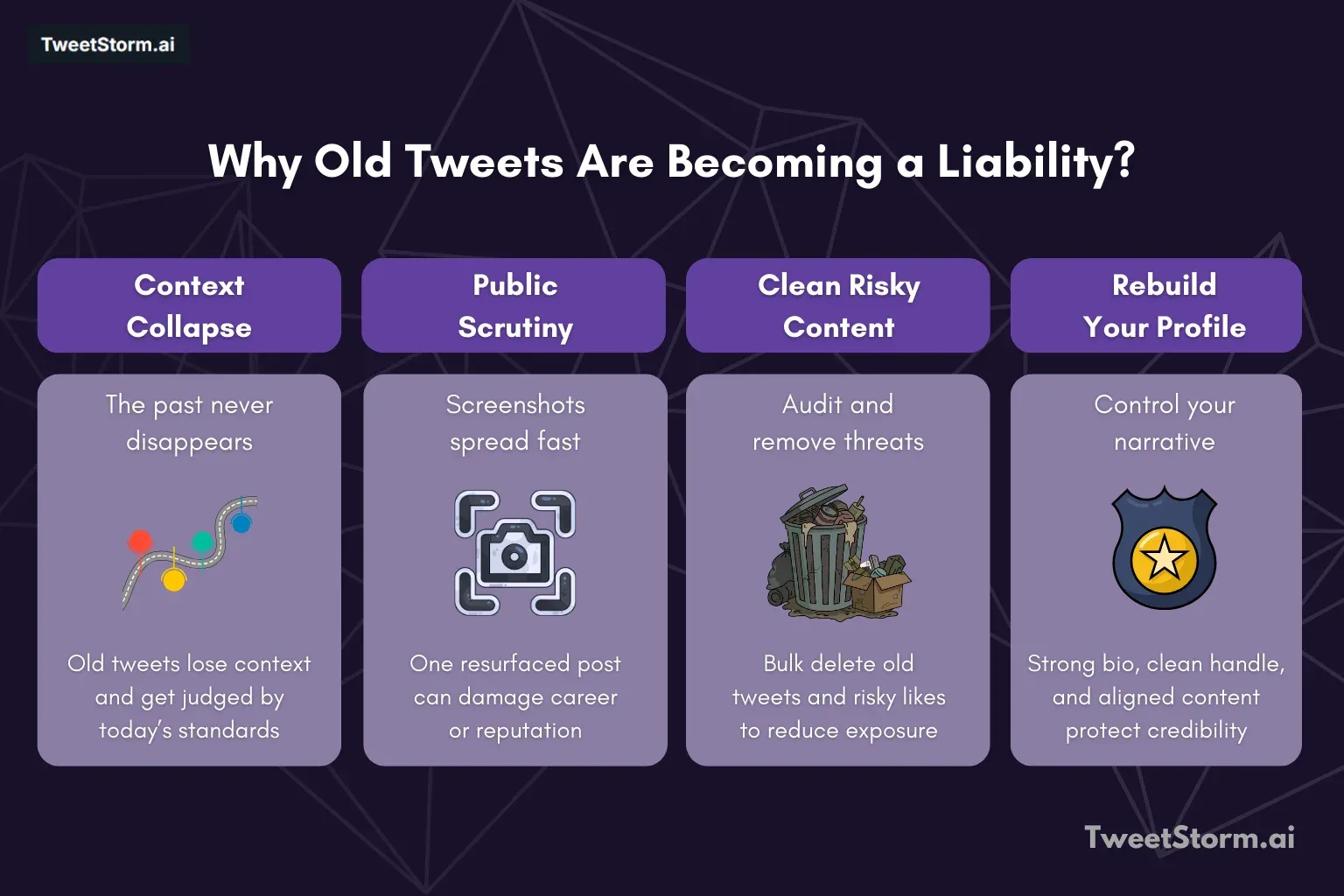
When you posted a tweet before, it was probably put up in one particular situation, like it was among only friends, during a trending hashtag, or some specific situation. But when someone finds those tweets that go viral years later, that original situation is usually gone.
Now, people look at it using today’s ideas, in today’s times, and it could be seen wrongly or used against you. This is called "context collapse," which makes old, even harmless posts risky.
More attention and judgment
If you want a new job, decide to run for politics, or promote a new idea or product, the first thing that people do, including those using automatic searching programs, is to look at your history on the internet.
One problematic tweet can be taken as a screenshot, shared by people who do not like you, and could start spreading very quickly. This may bring harm to your image or what you are associated with, the reason being an X/Twitter audit is needed.
Managing your risks online: Steps you can take
Protecting yourself is not about hiding completely, but about making sure you look after what information is out about you and handle any risks before they hurt you. That is why knowing how to manage your social media smartly really helps.
Step 1: Search and get rid of troubling posts
Most importantly, you need to know what negative or risky posts you might have left behind. Looking by hand through years of tweets is too much work and is not practical. Instead, having a strong cleaning application can help you do this job. For people who have hundreds or thousands of items, it is too difficult to pick which ones to remove one by one.
For those dealing with too many posts, using something like Mass Delete Tweets is very much needed. This makes it fast and lets you pick which old posts, such as bad jokes or posts written in anger, to erase based on things like keywords, times, or how many likes or comments there are. When removing posts in large amounts, you lower how much you can be attacked and reduce the chances of having your reputation destroyed.
Step 2: Fixing your modern presence and profile
What you tweet now starts to build your future reputation. Having your Twitter look the way you want is important. Ask yourself if your tweets reflect the goals you have.
In some cases, the risk is not one tweet, but many types of comments over time. Maybe you click ‘like’ on posts that could get you in trouble, or you have followed many accounts that are not good for your personal brand, so you must fix these too. Tools like Delete Twitter Likes can allow you to erase past likes that were mistakes, so people cannot scroll and see old agreements with things you regret.
Step 3: Making your profile uniform
Your page is like the main entrance to your online self. If it looks old, unprofessional, or lacks a clear purpose, it can hurt you. The profile should have a good and easily searchable username and a clear, short bio.
This does not clean old posts, but making your front image look good is very important for a strong reputation. Handy tools like Handle Generator and Bio Generator help make your profile professional and easy for others to find, which supports your preferred story about yourself.
TweetStorm: A solution to digital footprint management
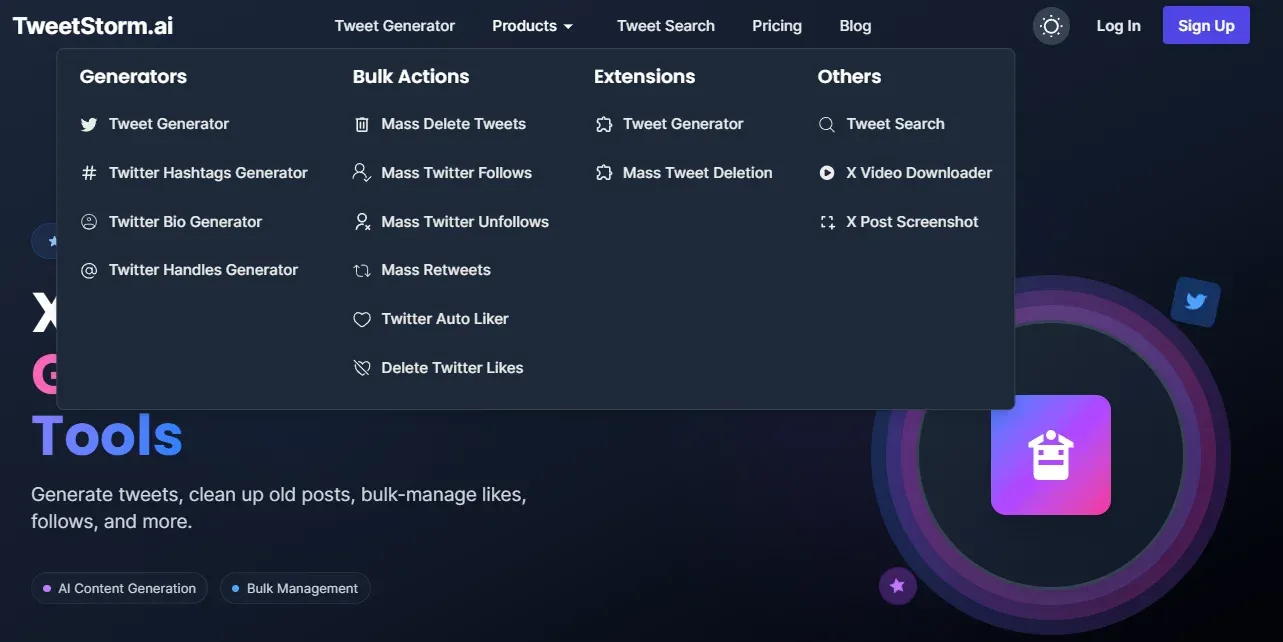
Trying to manage a social media account that is several years old may seem very overwhelming, but it can be much easier using tools such as those provided by TweetStorm. The tools inside TweetStorm aim to give you a unified strategy, not just for cleaning up but also to help you succeed in the future as well.
The usefulness comes from putting specialized features all together. With Mass Delete Tweets, users can delete large amounts of old tweets at once, which helps to remove big risks from public view. After this, Delete Twitter Likes can be used for fixing past likes, and that will make your public image look more managed.
For those who want to focus on making their profile look future-ready, Bio Generator and Handle Generator will help users keep everything about them looking neat and professional to outsiders.
By combining these vital tools, which cover everything from clearing bad posts to making your profile better, TweetStorm offers a single main place for X/Twitter tools. Using this broad approach makes sure you are doing more than just trying to solve old problems; you are also making the content X/Twitter algorithm rewards right now.
Conclusion
Nobody has the luxury anymore to behave any way they want online without consequence. Every tweet, every like, and every other thing you do leaves marks that anyone can find or check. Making sure your online record is clean is now something you must do if you take your job or public image with any seriousness.
By checking over your digital past and using specific tools for X/Twitter management, you stop just wishing your previous posts go unnoticed, instead, you start to lead your own public record, which makes your digital footprint work for you, not against you.
FAQs
How many years of tweets should be checked?
The best practice is to check every tweet you have ever posted. Most of the time, posts from 5-10 years in the past will cause the worst reputation issues, usually because those posts have old or less appropriate content for today. If you complete the audit, you can be sure that you have nothing left that can hurt you.
Is it okay to just erase old tweets to be safe?
It is not enough, because deleting tweets lowers risk by a significant factor, but it does not mean you are fully safe. People could have collected screenshots, or there might be archives. Getting the content off Twitter removes the easiest place for people to find it, so it is an important step, especially for preventing it from spreading.
What is meant by "context collapse" and why should I care?
“Context collapse” means that something you wrote for a small group online (like close friends) is read later by lots more people who do not know much about the backstory. This matters since things you posted long ago that were okay in a private chat could look very bad or be judged wrongly by strangers a long time later.
Should you get a new handle or update your bio often?
It is smart to update your bio regularly, but switching handles again and again can make your followers lose and weaken your “brand.” It is more effective to use something like a Handle Generator to find one suitable, easy-to-search handle and not change it all the time.
Does deleting your Twitter “likes” really have any impact?
Yes, your Likes tab is easy for anyone to look at and can show you support things you may not stand by today. Erasing old or problematic likes makes your current profile match your values and prevents it from appearing as though you support conflicting material.
Newsletter
Never miss a post
One email a week with everything new on the TweetStorm blog.